
Aging

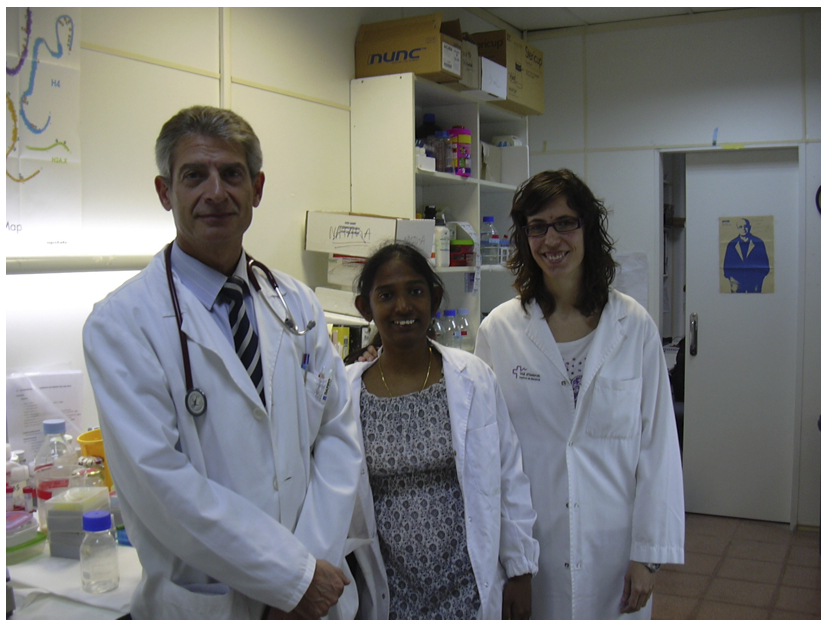
Our goal is the study of the molecular and immunological alterations associated to the aging process. In particular, the association and correlation of cellular aging and endothelial cell senescence with epigenetic and telomeric alterations, taking the inmunological alterations as the basis of cellular inmunosenescence. Identification of such alterations might provide us with new candidates for therapeutic intervention.
Research lines:
- Immunological alterations as basis of inmunosenescencein pathological aging.
This research line is centered into the study of the role of cross-reactivity among oxidized lipoproteins (oxLDL), antiB2-GP1 and membrane phospholipids, as well as between these complexes and heat shock proteins. We also focus into the role of proinflamatory (IL2 / IL6 / TNFalpha) and anti-inflamatory (IL4 / IL-10) cytokines, as well as with the different activation profiles of TCR and/or CD14 (TLR4) and the role of hormones such as melatonin and the growth hormone.
Figure: Caracteritzation of monocitic and lymphocytic population in healthy and pathological donors.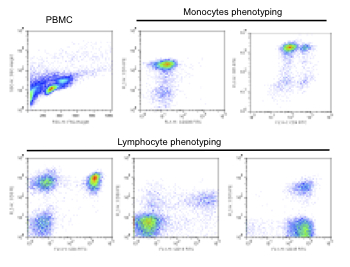
- Endothelial senescence and their pleiotropic effects onto inflamatory processes, inmunological response and angiogenesis.
Identification at the molecular level of pathways and proteins associated with the senescence of endothelial cells linked to aging and inflamatory responses. New candidate targets for therapeutic intervention at the clinical level and as new molecular moieties for nanomedicine approaches to improve aging related pathologies caused by endothelial inflamatory based senescence.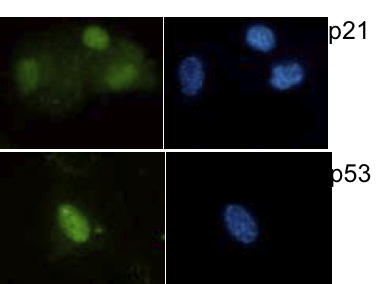
Figure: Accumulation of p21 and p53 within senescent endothelial cell nucleis.
 |
 |
 |
 |